
Mobile Mechanic vs Shop: Which Should I Choose for Brakes
When your vehicle taps its brakes, a complex network of hydraulic and mechanical components coordinates to safely bring tons of metal to a complete halt. Because the braking system is your car’s most critical safety feature, any sign of wear requires immediate attention. Whether you are hearing a high-pitched squeal while driving down Northfield Road or experiencing a spongy sensation when depressing the pedal, addressing the problem quickly is essential.
For vehicle owners looking for brake repair Livingston NJ, a modern dilemma often arises. Should you hire a mobile mechanic who travels directly to your driveway, or should you drive into established auto repair shops Livingston NJ? While the convenience of a mobile service sounds appealing, a brick-and-mortar facility offers distinct structural advantages when it comes to the safety and precision of your stopping power. Breaking down the differences between these two options will help you make an informed choice for your safety and your budget.
The Appeal and Limits of a Mobile Mechanic
The primary selling point of a mobile mechanic is undeniably convenience. In a busy world, the idea of a technician changing your brake pads while you work from your home office or relax on your couch is incredibly attractive. You avoid the logistics of dropping your vehicle off, arranging a ride back, or sitting in a waiting room.
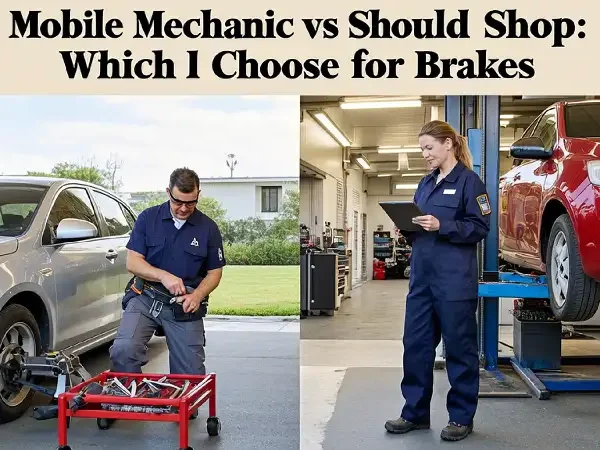
However, mobile mechanics operate with inherent physical limitations. Because they work out of the back of a van or truck, they can only bring a fraction of the tools available to a fully equipped shop. They lack the heavy-duty hydraulic lifts required to safely raise a vehicle completely off the ground for an eye-level, multi-angle inspection. Working on driveways or roadsides also exposes your vehicle’s sensitive hydraulic components to environmental contaminants like dust, wind-blown dirt, and rain. Furthermore, if a mobile mechanic discovers that you need an unexpected part, your vehicle may sit disassembled on your property while they drive to a local supplier to locate the necessary components.
The Professional Advantage of Established Auto Repair Shops
Choosing a physical shop provides a controlled environment designed specifically for complex mechanical work. When you bring your vehicle in for an affordable brake service Livingston NJ, you are tapping into a massive infrastructure of specialized machinery and collective technical expertise.
First, physical shops utilize commercial hydraulic lifts that elevate your vehicle completely. This allows the technician to walk underneath the car and inspect the entire braking architecture, from the pedal linkage to the rear calipers. Second, a brick-and-mortar facility houses heavy equipment that mobile vans simply cannot carry, such as brake lathes for resurfacing rotors, precision diagnostic computers, and specialized hydraulic flushing machines.
Finally, a physical shop provides a collaborative environment. If a technician encounters an unusual wear pattern or an elusive electronic parking brake issue, they can instantly consult with other master technicians on-site. This combined knowledge ensures an accurate diagnosis and a safer repair.
The Importance of a Full Brake Inspection
A quality brake job is never just about swapping out old friction pads for new ones. The braking system is an integrated network, and changing pads without checking the rest of the components can lead to premature wear or dangerous failures. A professional facility will always begin the process with a full brake inspection Livingston NJ to assess the health of the entire system.
- Brake Pads: Technicians measure the remaining friction material to ensure it meets safety standards and check for uneven wear that indicates a sticking caliper.
- Rotors: The metal discs are checked for thickness, heat spots, warping, and deep scoring to determine if they need to be resurfaced or completely replaced.
- Calipers: The hydraulic clamps are inspected to ensure the pistons move freely and the protective rubber boots are free of tears.
- Brake Lines and Hoses: Flexible rubber and rigid steel lines are checked for cracking, corrosion, swelling, or active fluid leaks.
- Brake Fluid: The fluid is tested for moisture contamination and copper content, which can corrode internal anti-lock braking system components.
A mobile mechanic working on a jack stand in a sloped driveway simply cannot execute this level of exhaustive quality control with the same precision as a dedicated shop.
Environmental Factors and Safety Controls
Weather plays a major role in the quality of an automotive repair. New Jersey winters bring freezing temperatures, snow, and road salt, while summers introduce high humidity and sudden downpours.
When a mobile mechanic works outside, they are at the mercy of these elements. Cold temperatures can make rubber seals brittle and difficult to seat correctly, while rain can introduce moisture into the braking system during a fluid flush. Because brake fluid is highly hygroscopic, meaning it rapidly absorbs moisture from the air, exposing an open master cylinder to a humid or rainy outdoor environment degrades the fluid before it even circulates through your vehicle. A climate-controlled service bay eliminates these environmental variables completely, guaranteeing that your components are installed in optimal conditions.
Long-Term Accountability and Warranties
An overlooked aspect of choosing between a mobile service and a traditional shop is the concept of long-term accountability. If you experience a squeak, vibration, or braking issue a few weeks after your service, a physical shop gives you a permanent place to return to for a resolution.
Reputable local businesses stand firmly behind their workmanship with structured parts and labor warranties. You know exactly where to find them during business hours. With a mobile mechanic, getting a technician back out to your property to fix a warranty issue can sometimes prove difficult, especially if they are balancing a tight schedule across multiple towns or handling emergency roadside calls elsewhere.
Frequently Asked Questions
Is it safe to just replace brake pads and skip replacing the rotors?
It depends entirely on the condition of the rotors. During an inspection, the technician will measure the thickness of the rotors with a micrometer. If the rotors are above the minimum safety thickness and are free of warping or deep grooves, they can often be resurfaced and reused. However, putting brand-new pads on warped or heavily scored rotors will cause severe vibrations, noise, and rapid pad destruction.
Why does my car shake or vibrate when I press the brake pedal?
A noticeable vibration or pulsation in the steering wheel or brake pedal usually indicates warped brake rotors. When rotors are subjected to extreme heat from prolonged braking, they can develop uneven surface variations. When the brake pads clamp down on a warped rotor, the variation causes the pads to bounce, creating a vibration that travels up the steering column.
What is the difference between ceramic, semi-metallic, and organic brake pads?
Ceramic pads offer quiet operation, low dust production, and excellent longevity, making them ideal for daily commuters. Semi-metallic pads contain metal fibers that conduct heat away efficiently, providing superior stopping power for heavy vehicles, towing, or performance driving, though they create more noise and dust. Organic pads are softer and inexpensive but wear out much faster.
How often should my vehicle’s brake fluid be flushed and replaced?
Most automotive manufacturers recommend flushing the brake fluid every two years or every 20,000 to 30,000 miles. Over time, brake fluid absorbs moisture from the atmosphere, lowering its boiling point and causing internal corrosion. In extreme stopping situations, contaminated fluid can actually boil, creating air pockets that result in a dangerous loss of braking pressure.
Why are my brakes squealing even though I just had them replaced?
New brakes can squeal for a few common reasons. It could be due to a lack of specialized anti-seize lubricant on the metal-to-metal contact points behind the pads, cheap friction materials, or a failure to properly break in the new pads against the rotors. A professional shop will properly lubricate these components and perform a road test to seat the pads correctly.
Can a mobile mechanic handle electronic parking brake systems?
While some advanced mobile mechanics carry the necessary electronic scan tools, many modern vehicles require specialized shop diagnostics to safely place the rear electronic parking brakes into a service mode. Attempting to manually compress a rear caliper piston on an electronic system without the proper computer interface can permanently destroy the expensive caliper motor.
Prioritize your safety on the road. Contact Livingston Collision today to speak with our experienced team and schedule a comprehensive evaluation for your vehicle’s braking system.